

Your brain is wired differently. Maybe you have ADHD, autism, dyslexia, Tourette syndrome, or another condition that affects how you process information, focus, or interact with others. You’re not alone.
Research says that 15 to 20% of people are neurodivergent. In most workplaces, that means there are people just like you, whether or not they’ve told anyone.
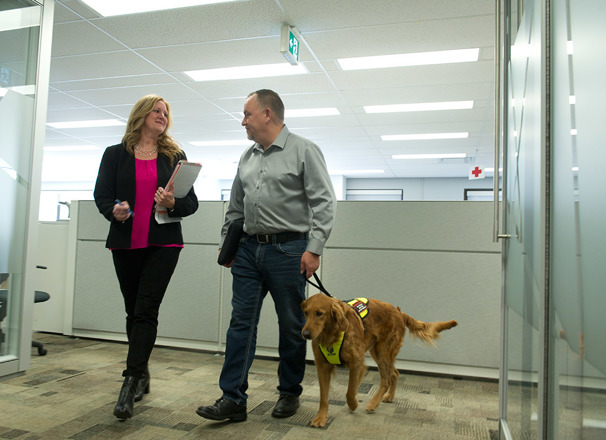
But most workplaces weren’t set up with neurodivergent people in mind. Open offices, fluorescent lights, unwritten social rules, and rigid schedules can all get in the way of your doing your best work.
That’s where workplace accommodations come in. These are changes to how, where, or when you work that help you get past barriers and do your job well. Accommodations are not special treatment. They’re tools that help you show what you can really do.
Know your rights under Alberta law
In Alberta, the Alberta Human Rights Act is the main law that protects you at work. It says employers can’t discriminate against you because of a physical or mental disability. And that includes being neurodivergent. Under this law, your employer has a duty to accommodate your needs unless doing so would cause them undue hardship.
Here’s what that means in practice: your employer must make reasonable changes to rules, policies, or the work environment to reduce the barriers you face because of your disability. This duty starts from the moment a job is posted and continues for as long as you’re employed.
Undue hardship versus duty to accommodate
You and your employer both have responsibilities. You must let your employer know what you need. In most cases, you must give your employer information from a health-care provider to show you need an accommodation. Your employer must take your request seriously and make a real effort to find a solution.
Your employer does not have to make an accommodation if it would cause them serious hardship. This could include an extreme financial cost or something that would seriously disrupt the business. For example, a small company shouldn’t have to build you your own special room in a rented office space.
But it’s not easy for an employer to claim undue hardship. Many common accommodations, like flexible scheduling or permission to wear noise-cancelling headphones, cost little or nothing.
One important point: you do not have to share your diagnosis with your employer. You just need to explain the challenges you face and the kind of support that would help.

Your employer can only accommodate needs they know about. For more on how this works, visit the Alberta Human Rights Commission’s page on workplace accommodation. If you work for a federally regulated employer—such as a bank, airline, or telecommunications company—see the Canadian Human Rights Commission’s workplace accommodation guide.
What accommodations look like in practice
Everyone’s unique. What works for one person might not work for another. But here are some common types of accommodation you can bring up as a starting point with your employer:
A quieter space. If noise, visual clutter, or bright lights make it hard to focus, even small changes help. That might mean a quieter workspace, permission to wear noise-cancelling headphones, softer lighting, or just a desk away from the busiest part of the office.
Clearer communication. If you process spoken information differently, ask for written instructions along with verbal ones. Get meeting agendas ahead of time, follow-up emails with action items, and the option to share your thoughts in writing instead of on the spot.
Flexible scheduling. Not everyone does their best work from 9 to 5. Flexible start and end times, the option to work from home, extra short breaks, or blocks of uninterrupted focus time can help you be more productive.
Helpful technology. Consider tools like text-to-speech software, organizational apps, reading overlays for dyslexia, or captioning on virtual meetings. Many of these are free or low-cost.
Workplace support. A mentor or buddy at work, job coaching when you’re starting out, neurodiversity training for your team, or clear written guidelines for workplace norms (instead of unwritten rules everyone is just supposed to know) can all make your workplace easier to navigate.

How to ask for accommodations
Asking for accommodations can feel awkward. But a little preparation goes a long way:
Figure out what you need. Before you talk to your employer, think about what’s getting in the way at work and what would help. Focus on the practical side, not the diagnosis or medical label. For example: “I have trouble concentrating when there’s a lot of background noise.”
Suggest a solution. When you explain the challenge, also offer a specific solution. Try framing it around your work: “If I could use headphones during focused tasks, I’d get through detailed work faster and with fewer errors.” You don’t need a formal diagnosis to start this conversation, but having a note from a health-care provider can help.
Check what’s already in place. Your workplace might already have an accessibility policy or process for accommodations. If you’re not sure where to start, the Job Demands and Accommodation Planning Tool (JDAPT) can help you figure out what accommodations fit your specific job.
Know what to do if it doesn’t go well. If your supervisor brushes off your request, you’ve got options. Talk to human resources or your union rep. You can also contact the Alberta Human Rights Commission for guidance. Under the Alberta Human Rights Act, you have 1 year after a discriminatory act to file a formal complaint.
What employers can do

If you’re an employer, building a neurodiversity-friendly workplace doesn’t have to be complicated. Consider these best practices:
Make inclusion part of how you operate. Instead of waiting for someone to ask for help, think about how your workplace works for everyone. Can people adjust their lighting? Are instructions clear and written down? Do employees feel safe raising concerns? These kinds of changes help your whole team.
Take a fresh look at how you hire. Traditional job interviews are heavy on small talk, eye contact, and thinking on your feet. They can screen out strong candidates who don’t interview in a typical way. A Deloitte Canada study found that 40% of autistic job seekers called the interview process a “great challenge.” Try offering questions in advance, allowing written responses, or using work samples or short practical exercises to show what they can do.
Train your people. Managers and teams do better when they understand neurodiversity. Good training covers how to have accommodation conversations, how to manage diverse teams, and how to recognize the strengths that neurodivergent employees bring.
Keep it confidential. When someone tells you about a neurodivergent condition, they’re trusting you. Share accommodation details only with people who genuinely need to know. Trust encourages more employees to ask for the support they need.
Why accommodations are worth it for everyone
A Conference Board of Canada study found that 85% of neurodivergent employees, 93% of neurodivergent managers, and 75% of non-neurodivergent managers agreed that neurodiversity is good for the workplace. Over 90% said neurodivergent employees should get the accommodations they need. Here’s why:
For employees, accommodations mean less stress, better focus, more job satisfaction, and a stronger sense of belonging.
For employers, they result in better retention, more innovation, and being known as a place where people actually want to work.
For teams, having people who think differently leads to better problem solving and stronger collaboration.
And many accommodations that help neurodivergent workers—clearer communication, flexible hours, quieter workspaces—end up making things better for everyone.
Resources to help you
Whether you’re an employee looking for support or an employer wanting to do better, these resources can help.
Alberta resources
Alberta Human Rights Commission—information on the duty to accommodate, filing complaints, and workplace rights.
Learning Disabilities Association of Alberta—information, programs, resources, and tools.
Autism Society Alberta—resources, support, and community programs across Alberta.
Centre for Autism Services Alberta—professional services for people with autism or other neurodevelopmental disabilities.
Disability Related Employment Supports (DRES)—workplace supports to help transition into the workplace or to keep current employment and fully participate in the workforce.
National resources
Canadian Human Rights Commission—resources for employees of federally regulated workplaces.
Autism Canada—a national resource hub with information on supports and advocacy.
Centre for ADHD Awareness, Canada (CADDAC)—education, advocacy, and resources for Canadians with ADHD.
ACT–Autism Community Training—free and low-cost training on autism and neurodiversity.
Signal49 Research—research and employer guides on neurodiversity in the workplace.
Dyslexia Canada—national organization focused specifically on dyslexia awareness, research, and resources.