

Many people think folks “settle” for jobs in the trades when they don’t have the grades to go to university. They don’t think of trades as “careers” but as menial, low-paying, dead-end jobs. And they think they’re only for men.
Nothing could be further from the truth.
Many trades pay very well. They offer variety, challenge, job security, and pensions. They provide opportunities for lifelong learning and growth. The work is meaningful, offering the satisfaction of doing something good for other people. Some tradespeople set their own schedules and run their own businesses.
The trades range from giving a great haircut to building a new home or designing a communications satellite. There are so many trades to choose from!
Many trade sectors across Canada are experiencing labour shortages. More than 700,000 Canadian tradespeople are expected to retire by 2028. And new trades, such as in IT, are emerging all the time. That means there are lots of opportunities. And the demand for skilled tradespeople is expected to grow.
Don’t let your misconceptions about the trades keep you from an amazing career. Read on to dispel the myths you’ve heard.
Myth #1: “Skilled trades are for people who didn’t do well in school”
This may be the most common misconception. In fact, entrance into many trades requires a solid foundation in math, science, and reading. Some tradespeople learn sophisticated digital skills and must keep up with the rapid pace of technological change. They also demand an ever-growing set of soft skills. Critical thinking, problem solving, creativity, communication, collaboration, and project management are important aspects of the skilled trades.
Success in the trades takes focus, dedication, hard work, and brain power—the hallmarks of high achievers.
Myth #2: “Trades don’t pay well”
Many trades offer earnings well above the national average. Entry-level salaries in Alberta’s trades start around $60,000. This compares well to $39,000 to $46,500 for entry-level salaries overall.
Experienced tradespeople often earn six-figure incomes. The Canadian Apprenticeship Forum reports that the average income for nationally recognized Red Seal trades in 2021 was $111,500 per year.
However, the gap between the lowest- and highest-paying trades was $155,000. While industrial instrument technicians earned about $200,000 a year, hairstylists and barbers earned just under $45,000.
Myth #3: “Trades are dirty, dangerous, and physically exhausting”
Yes, some trade jobs will get you dirty. If that doesn’t appeal to you, you can choose from many other trades. Have you ever seen a grimy baker? Or a grease-covered communication technician?
Even the traditional trades are evolving into technologically advanced careers that require mental ability, digital expertise, and manual skills. Today’s automotive service technicians, for example, are as likely to be analyzing computer systems as looking under a car hood.
If you prefer hands-on work to sitting at a desk from 9 to 5, you can choose a more physically demanding trade. The point is you have a choice. The trades require a range of skills and offer a variety of work environments. Manual labour is only a small part of the story in trades like draftsman, construction estimator, building inspector, and construction project manager.
And workers in all trades are protected by legislation and modern-day employment and safety standards.
Myth #4: “Trades are a career dead-end”
There’s lots of room for advancement in the skilled trades. Many tradespeople move into management or teaching positions at technical institutes. Others mentor their own apprentices. The Canadian Apprenticeship Forum reports that, in 2015, 39% of the journeypersons surveyed held supervisory positions. 1 in 4 were managers, and 1 in 3 owned (or had once owned) their own businesses.
Skilled tradespeople often specialize within their field. They may pursue additional credentials in fields such as business, education, engineering, or project management. As Skills Canada notes, “In terms of professional development, the sky is the limit…The level of advancement is up to the capability and desire of the tradesperson.”
Myth #5: “Trades are only for men”
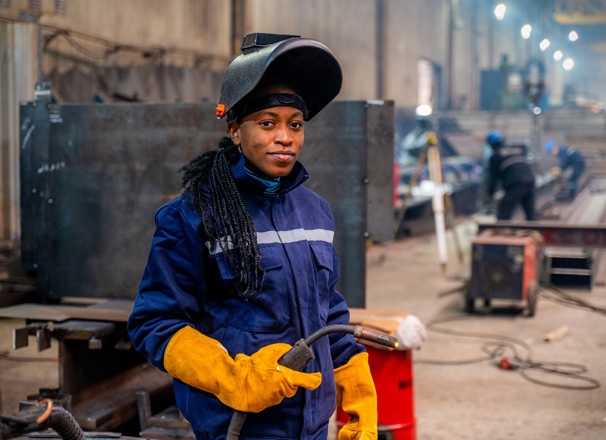
Women remain poorly represented in the trades, but not because they can’t do the work. Women proved themselves fully capable of doing “men’s work” during the world wars.
And many trades don’t require physical strength—or no more than housework. There’s no reason women can’t succeed at any skilled trade they choose.
Unfortunately, women can still face barriers such as harassment, gender bias, a lack of role models, and feeling like they don’t belong. The good news is that women now have access to financial assistance, recruitment programs, mentorship, and support. Jill-of-All-Trades, Women Building Futures, and the Women in Skilled Trades Peer Mentorship Group are some examples.
Woman power in the trades
Check out RBC’s “Women in Trades Blog” and Women Building Futures’ Alumni Success Stories to learn how women have dealt with obstacles and built rewarding careers in the trades.
Myth #6: “You don’t need much training to work in a trade”
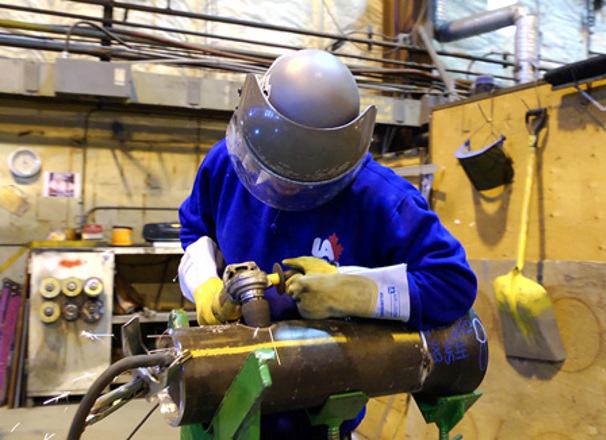
Certification for most trades requires training as an apprentice. Most apprenticeship programs require a combination of classroom instruction and hands-on training for four years. This is the same amount of time needed for an undergraduate degree.
Completing an apprenticeship leads to an education credential and a journeyperson’s certificate, which is issued when someone meets Alberta’s accreditation standards. Journeypersons in many trades may qualify for Red Seal endorsement. They must pass an additional exam, which shows they have met national standards for their trade.
Successful tradespeople embrace lifelong learning to keep their skills relevant in an increasingly technological world. Rapid change in fields like robotics and green energy make ongoing upskilling essential.
Check out the trade profiles on Trade Secrets Alberta to find the requirements for different trades. Some trades require shorter apprenticeships than others. For example, barbers must complete a 1-year apprenticeship. Auto body refinishers need to apprentice for 2 years. Painters and decorators need to apprentice for 3 years.
Myth #7: “There’s no future in trades with automation and AI”
AI and automation are changing the world of work—reshaping some jobs and eliminating others. In the trades, smart diagnostic tools and automated machines may replace predictable, repetitive, manual tasks. But there will always be a need for human creativity, adaptability, critical thinking, on-the-spot problem solving, spatial awareness, and physical dexterity. Because this “human touch” is difficult to automate, analysts predict the skilled trades will remain a secure career choice in today’s evolving workplaces.
In fact, AI and automation have created new opportunities in the skilled trades. They can reduce paperwork, minimize human error, boost efficiency, improve planning, and simplify complex tasks. This supports and complements the work of tradespeople. It frees their time to focus on more technical, specialized tasks that machines can’t do.
Skilled tradespeople are strong advocates for their trades
Scroll down on this page and check out these “Talk to a Trade” videos to hear 6 tradespeople talk about the value of their chosen career path.
Myth #8: “University is the only path to success”
Careers in the trades offer many levels of success.
- Tradespeople are in greater demand than university graduates. So, it’s easier to get and keep a job.
- The trades pay well, and you can earn significant extra pay through bonuses or overtime. The trades often offer union protection, pensions, and benefit plans.
- Getting established in the trades is faster and cheaper than university-based careers. The smaller initial investment of time and money means it’s easier to build a secure financial future.
- Work in the trades is varied, challenging, and satisfying.
- The trades offer many opportunities for learning and advancement. There’s a trade to suit every learning style and work preference.
A career in the trades can be a practical choice
A 2025 study by CourseCompare found that anesthesiologists were the highest-paid workers in Canada. They have an average base salary of $311,820. Senior electricians were the highest-paid tradespeople. They earn an average base salary of $106,861 as well as overtime and bonuses.
Canadian anesthesiologists must complete 2 or 3 years of undergraduate study, 4 years of medical school, and 5 years of residency. Overall tuition can climb to $100,000 or more before residency. Pay for residents starts at around $60,000 per year.
By comparison, electricians studying at SAIT pay about $5,400 in tuition for the classroom-based segments of their four-year apprenticeship. They earn an income during the hands-on segments. At graduation, they’re carrying far less debt than their university-focused friends.
University is clearly not the only path to career success.