

We are the Junior Forest Rangers
and this is Our Future. Our Responsibility.
The idea of a "Ranger Assistant Program" began in 1964. The goal was to offer young people an introduction to various aspects of forestry in Alberta and create an opportunity for transition into the newly formed forestry school at the Hinton Training Centre. With that in mind, Dr. Peter Murphy started the program which became the Junior Forest Rangers (JFR) in 1965.
What is JFR?
The JFR program is an incredible summer employment opportunity for high school students in Alberta, as well as post-secondary students or graduates from across the country. JFR is a provincially run program under the Ministry of Forestry and Parks. We have up to 9 crews stationed in the 10 different forest areas across the province. Each crew consists of a Crew Leader, Sub Leader, a Senior Crew Member and 7 first year Crew Members. Our crews live on an Alberta Wildfire base, and every day they are paid to take part in a wide variety of hands-on work projects and educational opportunities. Some of these projects or opportunities include trail maintenance/building, tree planting, stream assessments, certifications (ATV, canoe, wilderness first aid, PAL), wildfire mop-up, FireSmarting, wildlife research, climbing a wildfire lookout tower, mill tours, bushcraft and survival, and so much more!
For a general overview of the JFR Program, check out the 6 W's for JFR Leaders or 6 W's for JFR Members.
JFR Program Objectives:
To give participants an opportunity to develop career skills in natural resource management.
To perform useful and meaningful project work in natural resource management.
To promote personal development, inter-personal development and leadership skills.
To give participants career awareness by providing opportunities to meet natural resource professionals and visit their worksites.
To engage and explore traditional practices from elders and community leaders, including traditional medicine harvesting, ceremonies and protocols.
JFR Curriculum:
The new Junior Forest Rangers curriculum is built around six key pillars: Wildfire, Natural Resources and the Environment, Parks and Stewardship, Technical Skills and Certifications, Leadership and Community Engagement, and Cultural Knowledge. Together, these pillars provide a framework for meaningful, hands-on learning experiences that develop practical skills, environmental awareness, leadership abilities, and a deeper understanding of Alberta’s natural and cultural landscapes. The curriculum is designed to create a well-rounded summer experience that connects youth with the land, their communities, and future opportunities in the natural resource sector. A brief explanation can be seen below, and for more information about the curriculum and the types of projects they contain, click here: JFR Curriculum
Wildfire: Introduce JFR crews to wildfire prevention, wildfire operations, emergency preparedness and recovery. Projects build awareness of how wildfire affects Alberta’s landscapes and communities and how trained personnel prepare for, respond to and recover from emergencies.
Natural Resources and the Environment: Build knowledge and practical understanding of Alberta’s forests, ecosystems, wildlife, vegetation, habitat and environmental conditions. Projects help JFR crews observe the natural world, collect or interpret information, and understand how natural-resource professionals monitor and manage it.
Parks and Stewardship: Develop the skills, awareness and sense of responsibility needed to care for Alberta’s parks, trails, recreation sites and other natural spaces. Projects give crews opportunities to contribute practical work that supports safe and responsible outdoor recreation.
Technical Skills and Certifications: Build practical outdoor and field skills that help JFR crews work safely, navigate unfamiliar places, use equipment appropriately and become more capable in outdoor settings. Some skills can be taught by trained JFR leaders and specialized or regulated activities require qualified instructors.
Community Engagement and Outreach: Develop leadership skills and build connections with the communities they work in. Leaders and Crew members take on different leadership opportunities, community events, help the public understand the JFR program and the value of Alberta’s natural spaces and natural resource work.
Culture and TEK: Provide opportunities for JFR crews to learn about First Nations and Métis communities in Alberta, their cultures and relationships with the land, and environmental observations and teachings shared through Elders and Knowledge Keepers. Activities should be guided by community partners and delivered respectfully, with attention to local protocols and permissions.
Safety is our Top Priority:
All of our JFR Crew Leaders and Sub Leaders have a minimum of Standard First Aid and CPR. Some leaders are trained to a higher degree.
We need to make sure our crews can communicate with the Alberta Wildfire dispatch team. Our leaders are given a cell phone with satellite capabilities, a radio, and a Zoleo device. Our leaders have the ability to call emergency services any time they are on a project and have a direct line to the wildfire dispatch room.
Our leaders go through over two weeks of training, which includes vehicle training and driver assessment, first aid and emergency scenarios, radio training, tool training and much more.
Our Crew Members go through training to ensure they understand how to use our equipment and tools properly, and participate in radio training.
Our crews have access to a large SUV or pickup truck at all times. In the event a crew goes onto a wildfire, they are supervised by wildfire professionals and have access to a truck, SUV or helicopter. JFR crews are only permitted on wildfires that are deemed Under Control and will never be placed on the front lines- only mop-up duties or helping at a complex staging camp.
All leaders and members are provided with Personal Protective Equipment, including a hard hat, safety glasses, ear protection, face shield, first-aid kit, nomex, whistle, belt and gloves. Leaders and members bring their own steel toe boots.
On all project sites, crews complete a Site-Specific Hazard Assessment at the start of the day. This meeting goes over all of the potential hazards on-site and how to mitigate those hazards.
All crews must complete and submit an Emergency Response Plan to the wildfire duty room for overnight trips. The Duty Officer and dispatch have access to this document.
All crews check-in with the wildfire dispatch when they arrive on a work site and when they arrive back on base at the end of the day.
All crews have access to a large first-aid kit and personal first-aid kits that are attached to their belt.
Meet the Team
The JFR program's headquarters are located in Edmonton, AB. We are a team of three with support from the ten different forest areas.
JFR Program Specialist - Trevor Nichols (He/Him)
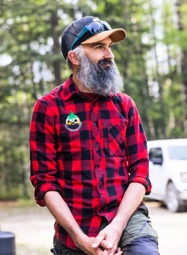
Hi! I have been involved with the JFR program for a total of 11 years. I started in this position in 2016 and it has been an incredible journey. I have a lovely wife, two awesome daughters, two doggos, and a cat. I am a huge bird nerd, love playing Dungeons and Dragons, avid hiker/camper, and recently started drawing. I love my job as I get to include many of my hobbies into different aspects of JFR. I have met so many incredible people in this program and continue to do so every year. If you have any questions, feel free to reach me at trevor.nichols@gov.ab.ca. Hiy Hiy!
JFR Program Assistant - Sandy Klassen (She/Her)
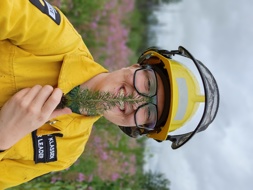
Hello! My name is Sandy; I have a Bachelor of Science Degree in Biology. I love being out in nature, hiking and camping. I also enjoy gardening, reading and painting. I have worked with JFR in previous years as a Leader, and I'm excited to step into the Program Assistant position this season to get an opportunity to peek behind the curtain and learn how to create an amazing summer for our crew members. I can't wait to hear how everyone's summer went!
JFR Program Assistant - Leonora (She/Her)
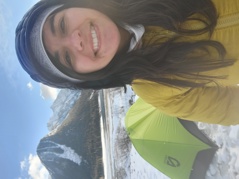
Hello, lovely humans! My name is Leonora, and I am so excited to join the JFR team! During the 2024 season, I had the honor of being a JFR crew leader for the Whitecourt/Fox Creek crew, which was an incredibly rewarding experience, filled with fantastic moments!
I love ditching cellphone reception and spending time outdoors, whether it's doing something chill like reading a book in my hammock or climbing a mountain. I enjoy backpacking, camping, mountain biking, hiking, paddleboarding, swimming, traveling, volunteering, and playing board games.
I’m super grateful for this opportunity and very excited to continue being part of JFR, learning and developing new skills, having fun, and making long-lasting, good memories!
What's next?
Whether you're interested in joining the program, learning more about our crews, or connecting with JFR in your community, explore the links below to discover more opportunities and resources.
Become a Crew Member
Learn about the Senior Crew Member Position
Become a Crew Leader or Sub-Leader
Request a School Presentation or Community Event
Have questions about the JFR Program? Check our FAQ section, or you can also Send us an email!