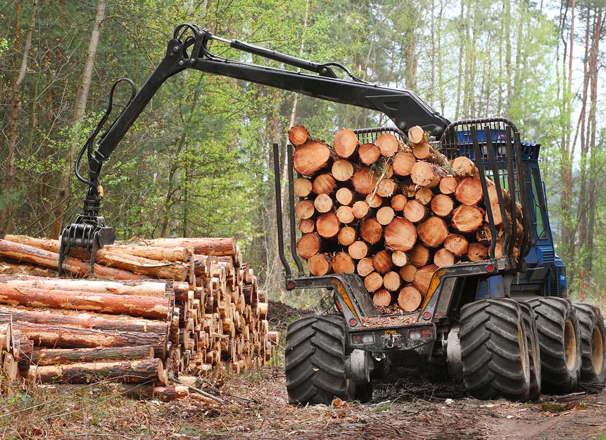
iStockphoto/fstop123
Forest Technician and Technologist
Forest technicians and technologists perform technical functions related to the scientific management of forested areas.

There was an error. Please try again.
This page is already listed in your guide. Please choose a different page to add.
Forest Ecosystems Protection Coordinator, Forest Fire Lookout, Forest Operations Manager, Forest Stewardship Manager, Lands Planner, Natural Resource Planner, Natural Resource Technician, Photo Interpreter
In Canada, the federal government groups and organizes occupations based on a National Occupational Classification (NOC) system. This alis occupation may not reflect the entire NOC group it is part of. Data for the NOC group can apply across multiple occupations.
The NOC system is updated every 5 years to reflect changes in the labour market. Government forms and labour market data may group and refer to an occupation differently, depending on the system used.
Here is how this occupation has been classified over time.
2006 NOC
2006 NOC-S
2011 NOC
2016 NOC
2021 NOC
2023 OaSIS
Forest technicians and technologists ensure that forestland is managed wisely. They work closely with other land- and resource-management specialists. They aim to optimize the production of forest resources and minimize adverse impacts on the land, water, and wildlife. They assess, plan, and manage the health, sustainability, conservation, and renewal of:
Forests
Vegetation
Wildlife
Watersheds
Soil
Ecosystems
In general, forest technicians work under the supervision of foresters or forest technologists.
Forest technicians and technologists may be involved in silviculture, timber management, and forest protection.
Silviculture is a branch of forestry that establishes, cares for, and reproduces stands of trees. The forested area is used for different reasons including wildlife habitats, timber production, outdoor recreation, and by Indigenous Peoples.
To ensure healthy, diverse forest management, forest technicians and technologists may:
Plan and administer timber harvesting (logging) and reforestation operations
Prepare sites, plant trees, or tend stands of trees
Make detailed drawings of and lay out harvest blocks, haul roads, and skid trails
Mark trees for harvesting operations
Inspect logs for defects
Measure logs to determine total volume
Estimate the marketable content in logs for use as saw logs or pulpwood
Keep records of the amount and condition of logs reaching mills
Survey regrowth on cut areas
Work in tree nurseries (see Greenhouse or Nursery Operator occupational profile)
Conserve and improve wildlife habitat through carefully planned programs
In timber management, forest technicians and technologists may work as “layout personnel” along with:
Regeneration surveyors
Timber cruisers
Mapping technicians
In this area, forest technicians and technologists may:
Oversee and analyze operations or services provided in forestry, logging, mining, quarrying, or oil and gas operations and industries
Conduct forest timber inventories to find out how many trees are in a specific area
Participate in research, analyze data, and prepare technical reports
Conduct forest surveys such as ecosystem classification and inventories
Analyze forests using information management technologies such as global positioning systems (GPS), geographic information systems (GIS), databases, and aerial photographs and light detection and ranging (LiDAR)
Interpret government regulations for effective supervision of staff and contractors
Direct activities such as the construction of access road and bridges
Perform reclamation and remediation activities
Work with government to develop and implement environmentally sound harvesting and reforestation plans
Consult with Indigenous communities
Work with the oil and gas industry to ensure activities comply with legislation and minimize negative impacts on the forest land base
Perform auditing and compliance functions
In forest protection, forest technicians and technologists may work as:
Aerial observers
Helitack or rappel crew members
Sector leaders
Timekeepers
Radio operators
Forestry warehouse persons
Air tank base managers or assistants
In this area, they may:
Direct wildfire control operations, including managing crews
Survey, monitor, and report on fire activities
Perform insect- and disease-control activities, such as collecting samples of plants, seeds, foliage, bark, and roots
Ensure adherence to safety regulations
Forest technicians and technologists may use or supervise workers who use:
Chain saws
Clearing saws
Manual tools
Herbicides to control weeds and undergrowth
Experienced forest technologists may:
Do the field work required to implement forestry plans
Supervise other forestry workers who acquire the data for plans
Help foresters develop plans
Develop plans themselves
Forest technicians and technologists typically work outdoors in all weather conditions. They often perform strenuous tasks on steep, wet, or uneven terrain. They can also work indoors to conduct research, analyze data, and write reports.
Forest technicians and technologists who work outdoors often work in remote locations. Sometimes they work on their own. They may commute daily to forest sites. Or they may have to be away from home for a week or more at a time. They often stay in small rural communities or in modern camps. They may also live in urban settings.
Lifting requirements vary depending on the job. They regularly lift loads weighing up to 15 kilograms.
Some forest technicians and technologists commonly work long hours. Some positions are seasonal.
When fighting forest fires, they often work 12- to 16-hour shifts for several days at a time. Forest technicians and technologists who fight fires may need to lift equipment weighing up to 30 kilograms.
In Alberta, this occupation is part of 1 or more 2023 National Occupational Classification (NOC) groups. If there are multiple related NOC groups, select a NOC heading to learn about each one.
Many NOC groups include 1 or more related occupations. The labour market data shown is for the whole group, not for a specific occupation. For examples, see Note.
To find out how well this occupation fits your work personality types, complete the Work Personalities Quiz in Find Your Fit.
Click or tap a personality type for its description.
Find other alis occupations that match this occupation’s work personalities.
To identify or change your work personalities, complete the Work Personalities Quiz in Find Your Fit.
In Alberta, this occupation is part of 1 or more 2023 National Occupational Classification (NOC) groups. If there are multiple related NOC groups, select a NOC heading to learn about each one.
Many NOC groups include 1 or more related occupations. The labour market data shown is for the whole group, not for a specific occupation. For examples, see Note.
Forestry technologists and technicians
2023 OaSIS: 22112.00
The graph below shows how well your scores match the overall abilities for this occupation.
The closer your ability scores are to the center, the more they match this occupation’s. The further away they are, the less they match this occupation’s.
The lower your ability scores are compared to the occupation’s, the more challenging the occupation will likely be for you. The higher your ability scores are compared to the occupation’s, the less challenging the occupation will likely be for you.
To find out how well this occupation fits your abilities, complete the Abilities Quiz in Find Your Fit.
The 49 abilities are grouped into 5 abilities sets: Critical Thinking, Numbers and Patterns, Physical Activity, Mind-Body Coordination, and Senses.
Some abilities are more relevant to an occupation than other abilities. Individual abilities that are not relevant to an occupation are greyed out.
To fill in or change the values for your abilities, complete the Abilities Quiz in Find Your Fit.
Critical Thinking includes 9 abilities related to identifying and solving problems, thinking of ideas, and communication, such as speaking and writing.
This is how well your scores match the set of Critical Thinking abilities for this occupation:
Numbers and Patterns includes 10 abilities related to math, memorizing, and multitasking. It also includes how we perceive patterns, shapes, and distances.
This is how well your scores match the set of Numbers and Patterns abilities for this occupation:
Physical Activity includes 9 abilities related to strength, balance, flexibility, coordination, and endurance.
This is how well your scores match the set of Physical Activity abilities for this occupation:
Mind-Body Coordination includes 9 abilities related to movement control and how we react to signals. It also includes fine motor skills, such finger and hand dexterity and hand-eye coordination.
This is how well your scores match the set of Mind-Body Coordination abilities for this occupation:
Senses includes 12 abilities related to seeing, hearing, and speaking.
This is how well your scores match the set of Senses abilities for this occupation:
Forest technicians and technologists need:
Spatial perception
Form perception
Motor coordination
Manual dexterity
Attention to detail
Communication and interpersonal skills
Those who work primarily outdoors also need:
Physical fitness
The ability to work alone, sometimes for long periods of time
The ability to deal with mechanical problems such as vehicle breakdowns
Forest technicians and technologists should enjoy:
Taking responsibility for projects
Having clear rules and organized methods
Directing and supervising others
Taking a methodical approach to compiling information and enforcing regulations
Developing innovative approaches to problems
In Alberta, this occupation is part of 1 or more 2016 National Occupational Classification (NOC) groups. If there are multiple related NOC groups, select a NOC heading to learn about each one.
Many NOC groups include 1 or more related occupations. The labour market data shown is for the whole group, not for a specific occupation. For examples, see Note.
This chart shows which job skills are currently in highest demand for this occupational group. It was created using this occupation's 35 most recent Alberta job postings, collected between Jun 17, 2022 and Oct 12, 2026.
Review these skills to learn:
| Construction Specialization: Team player | 23 |
|---|---|
| Attention to detail | 21 |
| Experience: 2 years to less than 3 years | 17 |
| Construction Specialization: Organized | 15 |
| Work under pressure | 15 |
| Tasks: Develop and maintain computer databases | 14 |
| Tasks: Conduct forest inventory cruises, surveys and field measurement | 11 |
| Tasks: Prepare construction specifications, costs and material estimates | 11 |
| Tasks: Prepare engineering designs and drawings | 11 |
| Tasks: Develop and prepare design sketches | 11 |
Employers and post-secondary schools may use the titles “forest technician” and “forest technologist” in different ways.
In general, minimum education level varies. Forest technicians and technologists need to gain required skills and knowledge of provincial forest legislation and regulations. To do that, they either train on the job or take related education programs.
Graduates of approved 2-year forest technology diploma programs must register as forest technologists with the Association of Alberta Forest Management Professionals (AAFMP) to practice forestry. For more information, see the Forest Technologist certification in Certification Requirements.
Computer skills are required. Familiarity with GIS and GPS systems is particularly important.
To expand or narrow your program options, visit Post-Secondary Programs and start your search with:
Completing a program does not guarantee entrance into an occupation. Before enrolling in an education program, prospective students should look into various sources for education options and employment possibilities. For example, contact associations and employers in this field.
Certain professional titles or duties within this occupation are protected by provincial legislation. Requirements vary if you use these titles or perform these duties.
The related legislation is shown below. If there are multiple related legislations, select a certification heading to learn about each one.
A Certified Technician (C.Tech.) is an applied science, information technology, or engineering technology professional. They perform routine technical procedures with occasional direct supervision. They also may assume limited responsibility for decision-making processes.
Under Alberta’s Engineering and Geoscience Professions Act [pdf] and ASET Regulation [pdf], you must register with the Association of Science and Engineering Technology Professionals of Alberta (ASET) to use the protected title Certified Technician (C.Tech.).
You do not have to register if you do not call yourself a Certified Technician.
For information on what you need and other details, visit the certification profile Certified Technician.
Forest technologists perform many of the technical functions involved in the scientific management of forested areas.
Under Alberta’s Regulated Forest Management Profession Act [pdf] and Regulated Forest Management Profession Regulation [pdf], you must register with the Association of Alberta Forest Management Professionals (AAFMP) if you intend to practice forestry. Only regulated members who meet registration requirements can use the protected titles and initials of:
For information on what you need and other details, visit the certification profile Forest Technologist.
Forest technicians and technologists work for:
Logging companies
Pulp and paper companies
Lumber companies
Oil and gas companies
Power companies
Forestry consulting firms
Environmental consulting firms
Land-management consulting firms
Private contracting firms
Schools
Government departments and agencies
Not-for-profit organizations
Some forest technicians and technologists are self-employed private consultants.
Work experience in forestry is a definite advantage for those seeking entry-level positions. Such positions may include:
Timber cruiser
Tree-planting supervisor
Outdoor experience is a definite asset. Examples of outdoor experience include:
Camping
Bush travel
Use of all-terrain or 4-wheel-drive vehicles
The Government of Alberta operates the Alberta Junior Forest Rangers program. It provides work-related forestry experience for senior high school students.
Competition for permanent positions is keen. Post-secondary program graduates usually start their careers in seasonal positions. They get permanent positions after gaining 2 to 4 years of experience. Most positions are in northern Alberta. With more experience, they may advance to supervisory positions.
Additional education is required to move into forester positions.
This section shows the industries where the majority of people in this occupation work. The data is based on the 2016 Census.
In Alberta, this occupation is part of 1 or more 2016 National Occupational Classification (NOC) groups.
Forestry technologists and technicians
2016 NOC: 2223
82.0% of people in this occupational group work in:
Many NOC groups include 1 or more related occupations. The labour market data shown is for the whole group, not for a specific occupation. For examples, see Note.
This section shows the Alberta job market condition, or short-term demand forecast, for this occupation over a 3-year period. It also shows the number of people employed in the occupation.
In Alberta, this occupation is part of 1 or more 2021 National Occupational Classification (NOC) groups.
Source: 2024-2026 Alberta Short-Term Employment Forecast
Many NOC groups include 1 or more related occupations. The labour market data shown is for the whole group, not for a specific occupation. For examples, see Note.
To see data for all occupations, visit Occupations in Demand.
Employment turnover is expected to increase as members of the baby boom generation retire over the next few years.
Starting salaries for forest technicians and technologists vary depending on the type of work performed.
In Alberta, this occupation is part of 1 or more 2021 National Occupational Classification (NOC) groups. If there are multiple related NOC groups, select a NOC heading to learn about each one.
Many NOC groups include 1 or more related occupations. The labour market data shown is for the whole group, not for a specific occupation. For examples, see Note.
Unless otherwise noted, the data shown here is for all industries and all regions in Alberta.
All wage estimates are hourly except where otherwise indicated. Wages and salaries do not include overtime hours, tips, benefits, profit shares, bonuses (unrelated to production), and other forms of compensation.
To see the full survey data for this NOC group, visit the wage profile.
Other wage sources
To make an informed wage and salary decision, research other wage sources to supplement this data. Examples of wage sources may include but are not limited to associations, government, schools, or unions. Not all sources may be available for every occupation.
Lower Reliability, represents a CV of between 15.01% and 33.00% and/or if fewer than 20 survey observations and/or if survey observations represent less than 33% of all estimated employment for the occupation.
| Wages* | Low (5th percentile) | High (95th percentile) | Average | Median |
|---|---|---|---|---|
| Starting | $20.00 | $39.52 | $30.71 | $34.76 |
| Overall | $23.00 | $51.04 | $37.84 | $39.76 |
| Top | $25.00 | $51.04 | $41.40 | $41.14 |
Swipe left and right to view all data. Scroll left and right to view all data.
* All wage estimates are hourly except where otherwise indicated. Wages and salaries do not include overtime hours, tips, benefits, profit shares, bonuses (unrelated to production) and other forms of compensation.
Pay brackets for hourly wages
| ALL INDUSTRIES | $74,265 |
|---|---|
| Public Administration | $86,147 |
Alberta Junior Forest Rangers website: alis.alberta.ca/junior-forest-rangers
Association of Alberta Forest Management Professionals website: aafmp.ca
Work Wild website: workwild.ca
Get information and referrals about career, education, and employment options from Alberta Supports.
Updated Mar 31, 2024. The information contained in this profile is current as of the dates shown. Salary, employment outlook, and educational program information may change without notice. It is advised that you confirm this information before making any career decisions.