Skip to the main content
This website uses cookies to give you a better online experience. By using this website or closing this message, you are agreeing to our cookie policy. More information
Alberta Supports Contact Centre

Toll Free 1-877-644-9992

Updated

Veterinary Technologist

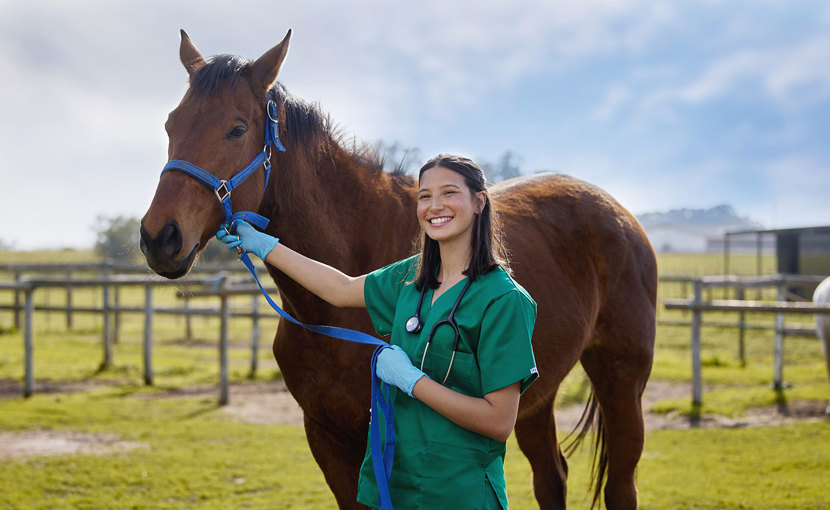
Veterinary technologists provide medical support for companion (pet), livestock (farm), and zoo animals, as well as wildlife. As part of the veterinary care team, they help to prevent, assess, and treat animal health conditions.

Also Known As

Animal Health Technologist, Registered Animal Health Technologist, Registered Veterinary Technologist

NOC Codes

In Canada, the federal government groups and organizes occupations based on a National Occupational Classification (NOC) system. This alis occupation may not reflect the entire NOC group it is part of. Data for the NOC group can apply across multiple occupations.

The NOC system is updated every 5 years to reflect changes in the labour market. Government forms and labour market data may group and refer to an occupation differently, depending on the system used.

Here is how this occupation has been classified over time.

2006 NOC

  • 3213: Veterinary and Animal Health Technologists and Technicians

2006 NOC-S

  • D213: Veterinary and Animal Health Technologists and Technicians

2011 NOC

  • 3213: Animal health technologists and veterinary technicians

2016 NOC

  • 3213: Animal health technologists and veterinary technicians

2021 NOC

  • 32104: Animal health technologists and veterinary technicians

2023 OaSIS

  • 32104.00: Animal health technologists and veterinary technicians
Duties
Updated Mar 31, 2026

Veterinary technologists provide a broad range of clinical and technical animal health services as part of the veterinary team. They apply their education and technical skills to support patient care under the supervision of a veterinarian.

In general, veterinary technologists:

  • Obtain informed consent from animal owners

  • Collect and prepare lab samples for diagnostic testing

  • Perform routine and advanced lab tests

  • Produce diagnostic images including x-rays, ultrasound, CT, or MRI

  • Prepare, calculate, and dispense prescribed medicine

  • Give medications, treatments, fluids, and vaccinations

  • Receive and triage animals, and prepare them for examination, treatment, or surgery

  • Perform a comprehensive physical examination

  • Monitor and assess clinical signs and patient status

  • Help with procedures and surgeries

  • Administer and monitor anesthesia

  • Provide post-operative nursing care

  • Provide first aid, wound care, or emergency and critical-care support

  • Perform dental cleanings and other oral health procedures

  • Provide rehabilitation therapies and other advanced therapeutic techniques

  • Support livestock breeding and herd health management programs

  • Provide animal behaviour consultation and related support programs

  • Provide palliative and end-of-life care

  • Educate clients and livestock producers about animal health, nutrition, behaviour, and disease prevention

  • Follow radiation safety and quality control procedures

  • Set up, clean, maintain, and sterilize medical tools and equipment

  • Manage pharmaceutical and medical supply inventory

  • Maintain medical records and required documentation

  • Support programs related to food animal health, food safety, biosecurity, and public health

Working Conditions
Updated Mar 31, 2026
  • Strength Required Lift over 20 kg

Most veterinary technologists work in:

  • Veterinary clinics

  • Hospitals

  • Laboratories

  • Research facilities

  • Animal shelters

  • Animal welfare organizations

Others work in agricultural settings such as:

  • Farms

  • Stockyards

  • Feedlots

  • Livestock production operations

Work hours may include evenings, weekends, and nights. Veterinary technologists may be on call or work overtime during emergencies.

The work can be physically and emotionally demanding. Veterinary technologists need to be compassionate and resilient.

Veterinary technologists sometimes work around strong, unpleasant odours or sights. They may be involved in animal welfare cases.

Veterinary technologists must follow established safety protocols. Workplace hazards may include:

  • Contact with dangerous animals

  • Exposure to radiation, biohazards, anesthetics (gases), and zoonotic diseases that can be transmitted to humans

Work Personalities

In Alberta, this occupation is part of 1 or more 2023 National Occupational Classification (NOC) groups. If there are multiple related NOC groups, select a NOC heading to learn about each one.

Many NOC groups include 1 or more related occupations. The labour market data shown is for the whole group, not for a specific occupation. For examples, see Note.

How This Occupation Compares to Your Work Personalities

Fit
Fit Guide
An occupation can be a great, good, fair, weak, or poor fit for you.
R
Realistic
This occupation
You
I
Investigative
C
Conventional
This occupation
You

This Occupation’s Work Personalities

Your Work Personalities

Quick Guide

Alis work personalities are based on Holland’s theory. It identifies 6 personality types: Realistic, Investigative, Artistic, Social, Enterprising, and Conventional. People with similar personalities and interests will tend to pursue similar careers. They are likely to create work environments that are favourable to their type.

Most people will identify with 2 or 3 dominant personalities. If the occupation’s personalities match your more dominant types, this occupation is more likely to be satisfying and rewarding to you.

This Occupation’s Work Personalities lists the personalities most likely to be found in that occupation. They are listed in order of importance, with 1 as the most important.

Your Work Personalities shows where the occupation’s personalities rank within your test results. Rank 1 is your most dominant type and 6 is your least dominant.

Learn about work personalities

Abilities

In Alberta, this occupation is part of 1 or more 2023 National Occupational Classification (NOC) groups. If there are multiple related NOC groups, select a NOC heading to learn about each one.

Many NOC groups include 1 or more related occupations. The labour market data shown is for the whole group, not for a specific occupation. For examples, see Note.

Animal health technologists and veterinary technicians
2023 OaSIS: 32104.00

How This Occupation Compares to Your Abilities

The graph below shows how well your scores match the overall abilities for this occupation.

The closer your ability scores are to the center, the more they match this occupation’s. The further away they are, the less they match this occupation’s.

The lower your ability scores are compared to the occupation’s, the more challenging the occupation will likely be for you. The higher your ability scores are compared to the occupation’s, the less challenging the occupation will likely be for you.

lower
a match
higher
Typical ability expectations for this NOC group
Your abilities

Abilities Sets

The 49 abilities are grouped into 5 abilities sets: Critical Thinking, Numbers and Patterns, Physical Activity, Mind-Body Coordination, and Senses.

Some abilities are more relevant to an occupation than other abilities. Individual abilities that are not relevant to an occupation are greyed out.

Critical Thinking

Critical Thinking includes 9 abilities related to identifying and solving problems, thinking of ideas, and communication, such as speaking and writing.

This is how well your scores match the set of Critical Thinking abilities for this occupation:

lower
a match
higher
Typical ability expectations for this NOC group
Your abilities

Numbers and Patterns

Numbers and Patterns includes 10 abilities related to math, memorizing, and multitasking. It also includes how we perceive patterns, shapes, and distances.

This is how well your scores match the set of Numbers and Patterns abilities for this occupation:

lower
a match
higher
Typical ability expectations for this NOC group
Your abilities

Physical Activity

Physical Activity includes 9 abilities related to strength, balance, flexibility, coordination, and endurance. 

This is how well your scores match the set of Physical Activity abilities for this occupation:

lower
a match
higher
Typical ability expectations for this NOC group
Your abilities

Mind-Body Coordination

Mind-Body Coordination includes 9 abilities related to movement control and how we react to signals. It also includes fine motor skills, such finger and hand dexterity and hand-eye coordination.

This is how well your scores match the set of Mind-Body Coordination abilities for this occupation:

lower
a match
higher
Typical ability expectations for this NOC group
Your abilities

Senses

Senses includes 12 abilities related to seeing, hearing, and speaking.

This is how well your scores match the set of Senses abilities for this occupation:

lower
a match
higher
Typical ability expectations for this NOC group
Your abilities

Quick Guide

The abilities or aptitudes shown for this NOC group come from the Occupational and Skills Information System (OaSIS).

The abilities scores range from 1 to 5, with 5 being stronger.

Occupations use different combinations and levels of these abilities. The Abilities Quiz helps you learn more about your ability levels and which occupations match your strengths.

If you have completed the Abilities Quiz, you can compare the occupation’s ability expectations to your own ability scores. Your scores may be lower than, a match to, or higher than the occupation’s expected abilities.

Learn about abilities

Traits & Skills
Updated Mar 31, 2026

Veterinary technologists need:

  • Confidence working with animals of all sizes and species

  • Empathy and compassion toward animals, clients and colleagues

  • Integrity, professionalism, and sound ethical judgement

  • Manual dexterity and attention to detail

  • Organizational and record keeping skills

  • Good physical health and stamina

  • Communication skills

  • Critical thinking, risk assessment, and problem-solving skills

  • The ability to work well with people

  • The ability to work well as part of a team

  • The ability to recognize and prevent avoidable distress, injury, or suffering

  • The ability to reflect on their work, seek guidance when needed, and apply feedback

  • A strong interest in medicine, science, and technology

  • A commitment to the humane treatment of animals

  • Respect for regulations and professional standards

They should enjoy:

  • Having clear rules and organized work methods

  • Performing diagnostic, and technical procedures

  • Interacting with clients in a respectful manner

In Alberta, this occupation is part of 1 or more 2016 National Occupational Classification (NOC) groups. If there are multiple related NOC groups, select a NOC heading to learn about each one.

Many NOC groups include 1 or more related occupations. The labour market data shown is for the whole group, not for a specific occupation. For examples, see Note.

Top 10 Skills Employers Are Looking For

Animal health technologists and veterinary technicians

2016 NOC: 3213

This chart shows which job skills are currently in highest demand for this occupational group. It was created using this occupation's 53 most recent Alberta job postings, collected between Dec 06, 2021 and Apr 20, 2026.

Review these skills to learn:

  • Whether or not this occupation matches your skill set
  • What training you may need to get these skills
  • What skills to highlight in your resumé, cover letter, and interview.
Tasks: Handle, restrain and care for animals undergoing treatment and surgery
Tasks: Administer treatments as prescribed by veterinarian
Tasks: Prepare and administer medications and vaccines under direction of veterinarian
Tasks: Assist veterinarian before, during and after surgery
Tasks: Provide wound and bandage care
Tasks: Provide nursing care and rehabilitation therapy for animals
Tasks: Perform routine animal dental procedures and assist veterinarians with animal dentistry
Attention to detail
Tasks: Conduct and assist in laboratory research
Tasks: Counsel clients on animal health care
Educational Requirements
Updated Mar 31, 2026
  • Minimum Education 2 years post-secondary

As a minimum, veterinary technologists must have a 2-year animal health technology or veterinary technology diploma accredited by the Canadian Veterinary Medical Association (CVMA) or American Veterinary Medical Association (AVMA).

Before enrolling in any program, prospective students should ensure the program is accredited and recognized across Canada.

To maintain registration, registered veterinary technologists must complete 20 hours of continuing education every year.

Required Education

The following schools offer programs and courses that meet this occupation’s educational requirements. Other eligible programs and courses may be available.

Lakeland College
Northern Alberta Institute of Technology
Northwestern Polytechnic
Olds College
Related Education

To expand or narrow your program options, visit Post-Secondary Programs and start your search with:

Completing a program does not guarantee entrance into an occupation. Before enrolling in an education program, prospective students should look into various sources for education options and employment possibilities. For example, contact associations and employers in this field.

Certification Requirements
Updated Mar 31, 2026
  • Certification Provincially regulated

Certain professional titles or duties within this occupation are protected by provincial legislation. Requirements vary if you use these titles or perform these duties.

The related legislation is shown below. If there are multiple related legislations, select a certification heading to learn about each one.

Veterinary Technologist

Veterinary technologists provide medical support for companion (pet), livestock (farm), and zoo animals, as well as wildlife. As part of the veterinary care team, they help to prevent, assess, and treat animal health conditions.

Legislation

Under Alberta’s Veterinary Profession Act [pdf] and Veterinary Profession General Regulation [pdf], registration with the Alberta Veterinary Medical Association (ABVMA) is mandatory. Only registered members may:

  • Work as a veterinary technologist under the supervision of a registered veterinarian

  • Use the titles registered veterinary technologist (RVT) or registered animal health technologist

For information on what you need and other details, visit the certification profile Veterinary Technologist.

Employment & Advancement
Updated Mar 31, 2026

Veterinary technologists work for:

  • Veterinary practices

  • Zoos, wildlife parks, and wildlife rehabilitation centres

  • Animal welfare organizations and humane societies

  • Law enforcement

  • Biomedical research labs

  • Government departments

  • Food inspection agencies (see the Agricultural Commodity Inspector occupational profile)

  • Companies that sell animal care or pharmaceutical supplies

  • Farms and feedlots

  • Post-secondary schools

  • Horse training facilities

Advancement generally takes the form of more complex duties or management tasks. Veterinary technologists can also pursue specialized training or Veterinary Technician Specialist status in a designated field such as:

  • Anesthesia

  • Behaviour

  • Clinical pathology

  • Clinical practice

  • Dentistry

  • Emergency and critical care

  • Internal medicine

  • Laboratory animals

  • Rehabilitative therapy

  • Zoological medicine

Veterinary technologists may pursue careers in education, industry, and government. These roles can include technical services and sales for diagnostic, pharmaceutical, and medical supply companies. They may also find positions with regulatory agencies and public health organizations.

Industry Concentration

This section shows the industries where the majority of people in this occupation work. The data is based on the 2016 Census.

In Alberta, this occupation is part of 1 or more 2016 National Occupational Classification (NOC) groups.

Animal health technologists and veterinary technicians
2016 NOC: 3213

84.8% of people in this occupational group work in:

Many NOC groups include 1 or more related occupations. The labour market data shown is for the whole group, not for a specific occupation. For examples, see Note.

3-Year Job Market Forecast

This section shows the Alberta job market condition, or short-term demand forecast, for this occupation over a 3-year period. It also shows the number of people employed in the occupation.

In Alberta, this occupation is part of 1 or more 2021 National Occupational Classification (NOC) groups.

Animal health technologists and veterinary technicians
2021 NOC: 32104
Hot
Job Market
3,055
Employed in AB

Source: 2024-2026 Alberta Short-Term Employment Forecast

Many NOC groups include 1 or more related occupations. The labour market data shown is for the whole group, not for a specific occupation. For examples, see Note.

To see data for all occupations, visit Occupations in Demand.

5-Year Job Market Forecast

This section shows the employment outlook for this occupation in Alberta over a 5-year period.

Employment outlook is influenced by a wide variety of factors including:

  • Time of year (for seasonal jobs)
  • Location in Alberta
  • Employment turnover (when people leave existing positions)
  • Occupational growth (when new positions are created)
  • Size of the occupation
  • Trends and events that affect overall employment, especially in the industry or industries from the previous list

In Alberta, this occupation is part of 1 or more 2016 National Occupational Classification (NOC) groups.

Animal health technologists and veterinary technicians
2016 NOC: 3213
2.8%
Annual Growth
(Above average)
52
New Positions

Source: 2021-2025 Alberta Regional Occupational Demand Outlook

Annual growth is from 2021 to 2025. New positions created each year are in addition to job openings created by employment turnover.

Many NOC groups include 1 or more related occupations. The labour market data shown is for the whole group, not for a specific occupation. For examples, see Note.

Employment turnover is expected to increase as members of the baby boom generation retire over the next few years.

At the same time, population growth and rising demand for pet and livestock care are contributing to a growing workforce shortage in both urban and rural areas. As a result, demand for veterinary technologists continues to grow.

Related Alberta Job Postings
Wage & Salary
Updated Mar 31, 2026

The average overall wage for veterinary technologists in Alberta is $29.66 an hour (Source: Alberta Veterinary Technologist Association, 2024 Wage & Benefit Report).

In Alberta, this occupation is part of 1 or more 2021 National Occupational Classification (NOC) groups. If there are multiple related NOC groups, select a NOC heading to learn about each one.

Many NOC groups include 1 or more related occupations. The labour market data shown is for the whole group, not for a specific occupation. For examples, see Note.

Animal health technologists and veterinary technicians

2021 NOC: 32104
Average Wage
$25.57
Per Hour
Average Salary
$47,812.00
Per Year
Average Hours
36.2
Per Week
Average Months on Payroll
11.9
Survey Methodology Survey Analysis

Source
2023 Alberta Wage and Salary Survey

NOC 32104 Wage Profile

Unless otherwise noted, the data shown here is for all industries and all regions in Alberta.

All wage estimates are hourly except where otherwise indicated. Wages and salaries do not include overtime hours, tips, benefits, profit shares, bonuses (unrelated to production), and other forms of compensation.

To see the full survey data for this NOC group, visit the wage profile.

Other wage sources
To make an informed wage and salary decision, research other wage sources to supplement this data. Examples of wage sources may include but are not limited to associations, government, schools, or unions. Not all sources may be available for every occupation.

A: High Reliability
Data Reliability Code Definition

High Reliability, represents a CV of less than or equal to 6.00% and 30 survey observations and/or represents 50% or more of all estimated employment for the occupation.


Hourly Wage

For full-time and part-time employees
  • Low
  • High
  • Average
  • Median
Starting
Overall
Top

Hourly Wage

For full-time and part-time employees
Wages* Low (5th percentile) High (95th percentile) Average Median
Starting $16.00 $28.00 $22.15 $22.00
Overall $19.00 $32.87 $25.57 $26.50
Top $20.00 $40.00 $29.64 $30.00

Swipe left and right to view all data. Scroll left and right to view all data.

* All wage estimates are hourly except where otherwise indicated. Wages and salaries do not include overtime hours, tips, benefits, profit shares, bonuses (unrelated to production) and other forms of compensation.

Pay brackets for hourly wages

  • Starting pay: average pay offered for entry-level positions
  • Overall pay: average pay across all employees in this occupation
  • Top pay: average pay offered to top-paid employees

Industry Information

ALL INDUSTRIES
Professional, Scientific & Technical Services
Public Administration

Skills Shortage

Employers that Recruited in the Last 2 Years
76%
76%)
Recruiting Employers that Experienced Hiring Difficulties
67%
67%
Employers with Unfilled Vacancies of over 4 Months
25%
25%
Vacancy Rate
7%
Related Post-Secondary Field of Study
  • Agriculture and Related Technologies
Other Sources of Information
Updated Mar 31, 2026

Alberta Veterinary Medical Association (ABVMA) website: www.abvma.ca

Alberta Veterinary Technologist Association (ABVTA) website: www.abvta.com

American Veterinary Medical Association (AVMA) website: www.avma.org

Canadian Veterinary Medical Association (CVMA) website: www.canadianveterinarians.net

Registered Veterinary Technologists and Technicians of Canada (RVTTC) website: rvttcanada.ca

Get information and referrals about career, education, and employment options from Alberta Supports.

Updated Mar 31, 2026. The information contained in this profile is current as of the dates shown. Salary, employment outlook, and educational program information may change without notice. It is advised that you confirm this information before making any career decisions.

Was this page useful?